
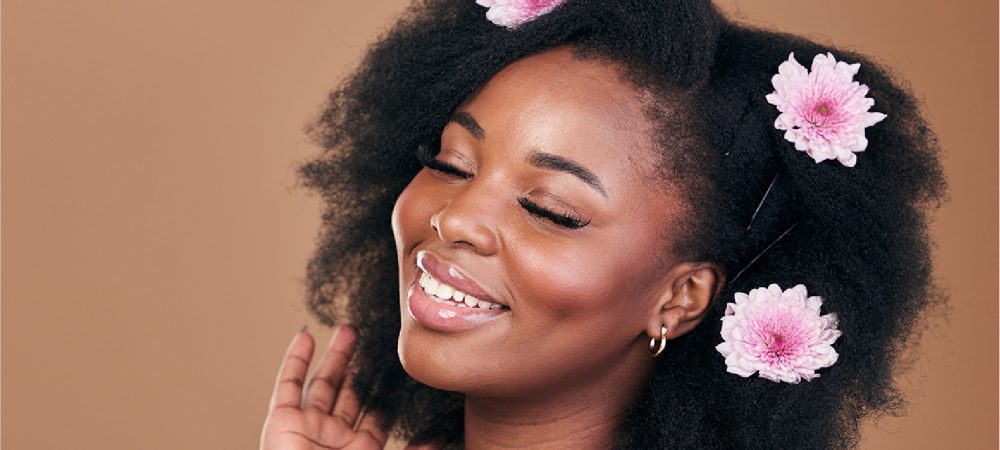
Of all hair types, African hair is often considered more fragile and prone to dryness due to its structure and unique characteristics. Because of this, it is more susceptible to breakage, hairloss and thinning. Fortunately, a few simple daily care routines can make Afro hair care far less stressful – while enhancing its natural beauty with moisture, strenght and glow.
Simple Hair Care Routine for African Hair
If you have natural African hair, you understand caring for it comes with a learning curve – and for many people, it can feel cumbersome, time-consuming, and expensive. However, the truth is that most of the challanges assosiated with Afro hair can be addressed by maintaining a simple, consistent hair-care routine.
For starters, always double cleanse. The first cleanse removes scalp and hair buildup, while the second thoroughly cleans the hair and replenishes it with lost moisture. It’s important to note that regularly cleaning Afro hair is crucial for both scalp and hair growth.
If possible, use sulphate-free shampoo to gently remove product build-up, dirt, and excess oils without stripping your hair’s natural moisture. If your hair is dry and low-porosity, consider using a clarifying conditioner between washes. Additionally, use lukewarm water to prevent dryness – and gently massage the scalp to boost blood circulation that critical for the growth of healthy hair.
Conditioning and Moisturizing Afro Hair
It goes without saying that deep conditioning is a non-negotiable part of afro hair care routine. This is because it helps repair damaged hair, strengthen strands, and deeply hydrate the hair shaft. At Azariah Beauty Lounge, we offer a variety of deep conditioning treatments, including deep moisturizing, hot oil, and protein treatments. The best deep conditioning treatment for your Afro hair depends on your hair needs at the time, but if you are unsure, our qualified stylists can better advise after a hair assessment. Why is this important? Well, the wrong choice of treatment can have adverse effects on your hair.
What to do to condition and retain moisture in African hair
To get the best out of your Afro hair, you need to condition it to seal the open follicles and therefore smooth the hair. It’s also the perfect time to detangle it (using a detangling brush or wide-toothed comb) to gently work through the knots from the ends to the roots, preventing more knots and hair breakage. Don’t forget to coat the ends of the hair with conditioners, since they are the oldest and most fragile sections of the hair structure. Rinse with cool water and seal the cuticle.
Moisture brings out the best of Afro hair, but how can you maintain it? Well, African hair, particularly Type 4, requires heavy creams for the best results. Less curly hair, on the other hand, can easily be moisturized using simple lotions and leave-in conditioners.
Moisturising African hair is one thing, but for its full natural appeal, you also need to seal in the moisture. Our qualified stylists at Azariah Beauty Lounge in Nairobi can help select the most suitable lotions and leave-in conditioners based on the initial hair assessment. Remember, dryness is the worst enemy of natural Afro hair. Based on the hair assessment, our stylists will recommend either the LOC (Liquid, Oil, Cream) or LCO method. These layering methods help lock in hydration, leaving your hair’s natural curves soft and defined.
Styling Your African Hair After Maintenance
You’ve done quality routine maintenance of your Afro hair, including identifying the type, conditioning, and moisturising. The last piece of the puzzle is styling. Fortunately for you, there are several ways you can style African hair. Still, it’s important to understand how, where, and when to style your hair for longevity, great appeal, and overall health.
Braiding is the most popular styling method for Afro hair. However, what most people don’t know is that it is the perfect style for those whose hair is exposed to environmental extremes, such as excessive sunlight, water, or humidity. It’s also important that your braids are not done too tightly – if it hurts while braiding, it needs to be redone because, in maintaining African hair, pain equals damage.
You may also refresh your natural hair curls using curl enhancers, revivers, and mists, or opt for heat styling. However, it is essential to use heat-protecting products before styling to help minimize heat damage. If you are looking to heat-press, use ceramic combs or irons (once a week). Also, make sure the hair straightening device has a temperature dial – use the lowest setting to achieve the style you desire.
Post-styling Care for Afro Hair
After styling, remember to trim your ends regularly. Split ends lead to breakage, which stunts hair growth. A rule of thumb is to trim your hair every 6-8 weeks to maintain healthy ends and prevent excessive breakage.
At night, preserve your style and hair moisture by wrapping your hair in a satin or silk bonnet, or by using a satin pillowcase to reduce friction while you sleep. Avoid cotton pillowcases, as they are known to cause breakage and absorb moisture from hair.
Lastly, keep your scalp healthy. Remember, a healthy scalp is the foundation of healthy hair. Massage your scalp with natural oils, such as castor oil, to promote blood circulation and stimulate hair growth.
If you’d like a tailored hair-care routine for your African hair, visit Azariah Beauty Lounge at Hill Park Hotel, Nairobi, or contact us at +254 725 691240 for a free consultation service. Our qualified stylists will be more than happy to sit down with you and offer a comprehensive solution for your Afro hair needs.


